

Brain-Based Program Brings Dyslexic Teen from Non-Reader to 12th Grade in 10 Months
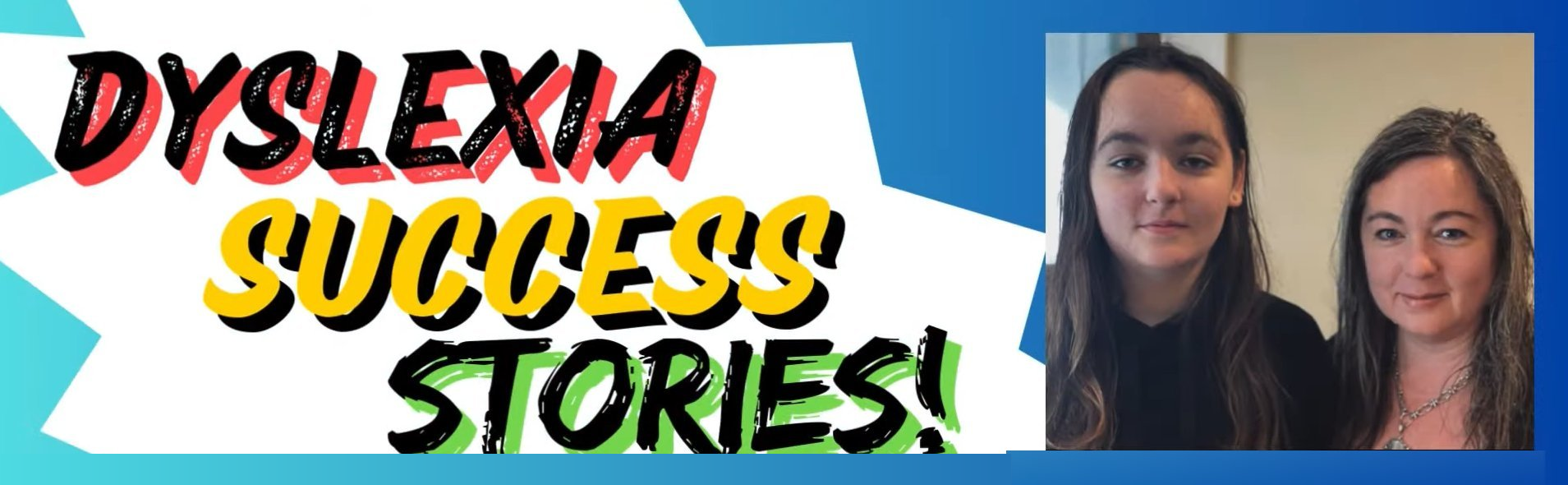
Homeschooled teen with dyslexia and parent share real-world reading progress following structured literacy intervention.

Dyslexia case study showing student progress from non-reader to 12th-grade reading accuracy in 10 months based on pre- and post-assessment data.
The Neuro-Development of Words (NOW!) Programs™ logo, a neuroscience-based speech-to-print literacy program supporting reading, spelling, and language development for children with dyslexia and related learning differences.
Documented results show measurable reading gains when instruction follows the brain’s developmental sequence—challenging common assumptions about dyslexia
● Case study: 13-year-old homeschooled student progressed from non-reader to 12th-grade reading accuracy in under 10 months
● Measured outcomes: Gains confirmed through pre- and post-assessments of phonological processing and reading accuracy
● Intervention approach: Instruction developed foundational sound processing before introducing phonics and text
● Scientific basis: Results align with experience-dependent neuroplasticity—the brain’s ability to build skills through structured experience
● Real-world impact: Student progressed from avoiding text to independently reading menus, road signs, and full-length novels
● Dyslexia relevance: Demonstrates potential for measurable reading improvement in teens with dyslexia when foundational skills are developed
● On dyslexia: Pre- and post-assessment data from this case challenges the assumption that dyslexia-related reading difficulties cannot be substantially reversed.
Dr. Tim Conway, a PhD neuropsychology and fMRI researcher and founder of NOW! Programs®, has documented a clinical case study showing a 13-year-old homeschooled student progressing from non-reader to 12th-grade reading accuracy in under 10 months. The student completed daily structured literacy intervention through the NOW! Foundations for Speech, Language, Reading and Spelling® program. Pre- and post-intervention assessments demonstrated measurable gains in phonological processing and reading accuracy. These results align with experience-dependent neuroplasticity—the brain’s ability to build reading skills through structured, evidence-based training that did not require any different sequence of learning than occurs for typical readers.
Watch: If Reading Isn’t Working… Here’s Why (Sound Before Letters Explained)
A short video explanation from Dr. Tim Conway illustrates how reading develops from sound processing—not memorization—and why foundational skills must be built before phonics.
Explore the Full Case
To explore the full case and see how these outcomes were achieved:
• Watch the Dyslexia Success Stories episode, Homeschooling, Dyslexia, and Triumph
• Learn more about the assessment and intervention process at nowprograms.com
• Schedule a dyslexia consultation online
The Science Behind Measurable Reading Gains
According to Dr. Conway, the outcomes observed in this case reflect a replicable process grounded in evidence-based inducement of experience-dependent neuroplasticity—the brain’s ability to form and strengthen neural pathways in response to targeted, structured training. Drawing on fMRI research comparing brain activity in individuals with and without dyslexia, Dr. Conway explains that differences in neural activation are not fixed traits. They reflect underdeveloped phonological and language processing skills. Once those skills are developed, brain activity patterns in individuals with dyslexia become identical to those of typical readers.
NOW! Foundations for Speech, Language, Reading and Spelling® program:
• Builds phonological awareness through neurologically sequenced multisensory instruction before introducing letters and phonics — no memorization required.
• Develops the sensory-motor foundation evident in skilled readers across visual, auditory, speech-motor, speech-tactile, and cognitive processing.
• Follows the brain's natural developmental sequence for learning to read.
For families, including those in homeschool environments where individualized instruction is possible, this sequence provides a structured, measurable and evidence-based program for developing accurate and fluent reading, not relying on compensatory strategies, supports, aids or inconsistent progress.
Rethinking How the Brain Learns to Read
Dr. Conway emphasizes that the outcomes observed do not come from a “different” learning method but instead provide explicit instruction in each step from how the brain typically develops reading skills.
"Dyslexics do not learn differently — so we don't need a different way to teach them. The brain builds reading the same way whether you have dyslexia or not. We just need to give it the right learning experiences in the right sequence."
— Dr. Tim Conway, PhD, Founder of NOW! Programs®
A Homeschool Family’s Search for Answers
For this student’s family, the path to reading proficiency followed years of confusion and inconsistent progress despite significant time and effort—an experience familiar to many homeschooling parents navigating reading instruction at home.
“We come from a family of readers, so when our children didn’t read, it was very confusing. We would work for hours on the alphabet, come back the next day, and it was all gone. There was no floor under the learning.”
—Eshanne, parent of the student
From Avoiding Menus to Reading Novels Independently
For this homeschooled teenager, her reading gains quickly became visible in everyday life. Tasks that once caused her anxiety became manageable and often effortless. Her mother described her prior reading ability as “zero”; she did not retain skills she learned from one day to the next. Importantly, after dyslexia intervention, her reading became stable, self-directed, and integrated into her daily life.
Real-world changes included:
● Independently reading restaurant menus
● Reading road signs while traveling
● Completely read the entire Harry Potter series, in under six months, on her own
● Transitioning from reading avoidance to sustained, independent reading
What This Means for Families Navigating Dyslexia
For many families, the central question remains:
Is meaningful reading improvement possible, or must challenges simply be managed?
According to Dr. Tim Conway, PhD, outcomes like those seen in this homeschooled teenager highlight what is possible when instruction aligns with how the brain develops reading skills.
For families, this means:
• Dyslexia does not mean a child’s brain “learns differently”
• Reading challenges can improve when instruction follows the brain’s natural development
• Progress is possible when foundational phonological processing skills are explicitly and systematically developed
Students can move toward:
• Greater reading accuracy
• Independent reading
• Reading aloud with confidence (not fear or anxiety)
• Long-term gains can include:
• Increased academic independence
• Confidence to fully engage in school and everyday life
While individual results vary, this case demonstrates the potential for measurable, meaningful progress.
Frequently Asked Questions
Can a child with dyslexia learn to read at grade level?
Yes. While individual results vary, this case study demonstrates that students with dyslexia can achieve grade-level or above-grade-level reading accuracy when instruction targets foundational phonological processing skills and follows the brain’s natural developmental sequence for reading.
How long does it take to see reading improvement?
Progress depends on the individual learner, but in this documented case, measurable gains occurred within 10 months of consistent, daily intervention, tracked through pre- and post-assessments.
Can this be done in a homeschool environment?
Yes. This case involved a homeschooled student, demonstrating that structured, evidence-based reading intervention can be effectively implemented outside of traditional school settings with consistent daily practice.
About NOW! Programs®
Founded in 2013 by neuropsychology researcher Dr. Tim Conway, NOW! Programs® is an educational technology organization providing Science-of-Reading literacy intervention informed by peer-reviewed research. Grounded in 40 years of clinical work at The Morris Center, the model delivers high-intensity, speech-to-print instruction to strengthen language, decoding, reading, and spelling skills in children and adults.
________________________________________
Expanding Access to Evidence-Based Literacy Support
NOW! Programs® is designed to make intensive literacy intervention more accessible:
• Intensive programs are commonly completed within two to eight months, with students participating in one to four sessions per day
• Online sessions begin at approximately $30 per hour
For more information, visit nowprograms.com.
Candice Polowitz Johnson
NOW! Programs®
+1 352-870-0898
email us here
Visit us on social media:
LinkedIn
Instagram
Facebook
YouTube
TikTok
X
If Reading Isn’t Working… Here’s Why (Sound Before Letters Explained)
Legal Disclaimer:
EIN Presswire provides this news content "as is" without warranty of any kind. We do not accept any responsibility or liability for the accuracy, content, images, videos, licenses, completeness, legality, or reliability of the information contained in this article. If you have any complaints or copyright issues related to this article, kindly contact the author above.
